
Evening mood lighting in the living room, for relaxing or entertaining
In the evening, light a living room from low down. Dim the ceiling light or switch it off, add two or three 300 to 600 lumen lamps at 2,700 K, then change what is on as the evening moves on.

Mood lighting is not something you buy as one fitting; you put it together. A dimmable ceiling light turned down, two or three low lamps, a source hidden behind furniture or a string of LED fairy lights, all at 2,700 K and with no bare bulb in sight. The overall level drops well below the 100 to 150 lumens per m² of daytime use, and that is deliberate. From one evening to the next, what changes is the combination that is switched on, not the equipment.
The dimmer, the first piece of the set-up
An LED only dims properly with a dimmer designed for it, of the trailing-edge type; an old dimmer made for incandescent bulbs makes it flicker or buzz. All three parts must be marked dimmable, the bulb, the fitting and the dimmer, and a ceiling light with non-dimmable integrated LED will never become dimmable. Some dimmers need a minimum load of 10 to 20 W, which one small LED bulb does not reach, and they flicker at low settings. Plenty of our living room ceiling lights are listed as dimmable. That mention on the product page is what counts.
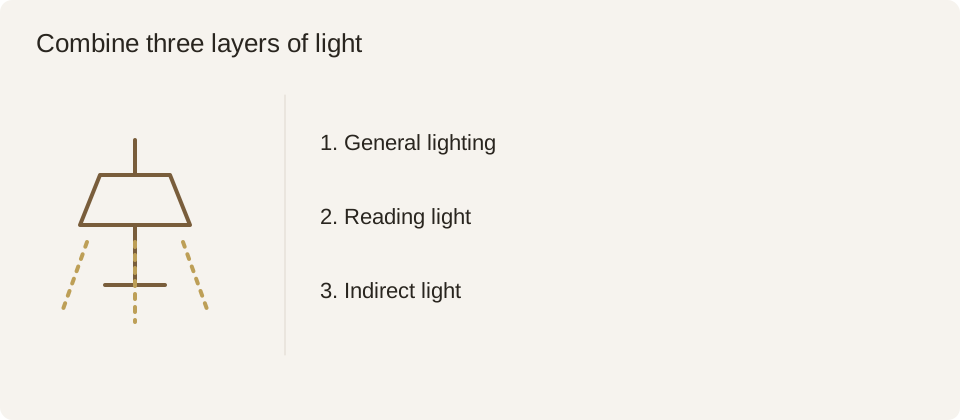
Low lamps: below eye level, 300 to 600 lumens
Mood comes from sources placed lower than the eyes of someone sitting down, so that you see the light on objects rather than the lamp itself. A living room table lamp gives 300 to 600 lumens. Two or three, spread into the corners of the room rather than bunched by the sofa, are enough for a 20 m² living room in the evening. Choose a fabric shade or an opal diffuser. A visible filament bulb is only bearable on a dimmer and at 400 lumens per bulb at most, otherwise it is the one thing the eye sees.
A living room floor lamp provides the second level, with 800 to 1,500 lumens for a mood model and 1,500 to 3,000 for an uplighter that washes the ceiling and sends back shadow-free light. Without a dimmer, that uplighter stands in for a ceiling light turned down. A living room wall light of 300 to 500 lumens, 1.60 to 1.80 m from the floor, takes the place of a lamp where space is short. Pointed upwards, it needs 60 to 80 cm below the ceiling, or it leaves a hot spot there.
Fairy lights and LED strips, the hidden light
A string of LED fairy lights on a shelf or along a bookcase gives almost no light, and that is the point. It puts small warm dots at the back of the room while the lamps do the rest. An LED strip behind the TV unit or under a low cabinet lights the wall and narrows the gap between the bright screen and the darkness around it, which is easier on the eyes during a film. Coloured bulbs make a party, not a reading light, and they replace neither 2,700 K nor the dimmer. Plug all these sources into a switched extension lead or a smart plug so they come on with one touch.
Worked example: a 4 × 5 m living room, one room for several evenings
Picture a 20 m² living room with a 2.50 m ceiling, a sofa facing the screen, a reading armchair in the corner and a bookcase on the back wall. During the day, the dimmable ceiling light gives 2,000 to 3,000 lumens at 2,700 K, in line with the figures for a well-lit living room. For the evening, the room has a 1,500 to 3,000 lumen uplighter on a dimmer in one corner, two table lamps of 300 to 600 lumens, a 400 to 800 lumen reading light with a directed beam by the armchair, an LED strip behind the screen and fairy lights in the bookcase.
| Evening | Switched on | Left off |
|---|---|---|
| Film night | Strip behind the screen, one table lamp on the far side from the screen | Ceiling light, uplighter, reading light |
| Drinks with friends | Ceiling light at a third, two table lamps, fairy lights | Reading light, LED strip |
| Reading | Reading light above and behind the shoulder, uplighter turned down | Ceiling light, fairy lights |
| Late evening | One table lamp, fairy lights | Everything else |
The reading light stays at 2,700 K like the other sources; its height and angle are covered in the guide to reading and task lamps. For reading, the uplighter takes over from the ceiling light. It lights the ceiling while the page gets the reading light, and neither source is in your line of sight.
Two questions we are often asked
Can a smart bulb replace a dimmer?
For a table lamp or a floor lamp, yes. It dims and changes colour temperature from your phone or a remote control, without touching the wiring. Never fit one on a circuit that already has a dimmer, as the two work against each other. For the ceiling light, it only works if the fitting takes a bulb; a model with integrated LED stays as it was sold, dimmable or not.
My integrated LED ceiling light isn't dimmable. What can I do?
It won't become dimmable. In the evening, leave it off and build up the light with a 1,500 to 3,000 lumen uplighter on a foot dimmer, plus two table lamps. If you replace it, choose a model listed as dimmable and an LED-compatible dimmer.
Models to compare
Living room lighting →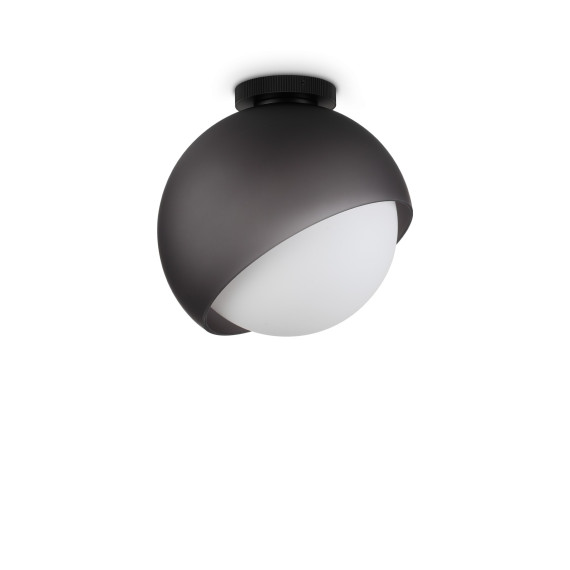
Bloom black ceiling light, white globe under a grey half-shell, Ø 30 cm
In stock
£222
- Height (cm)
- 29
- Bulbs included
- No
- Colour
- Black
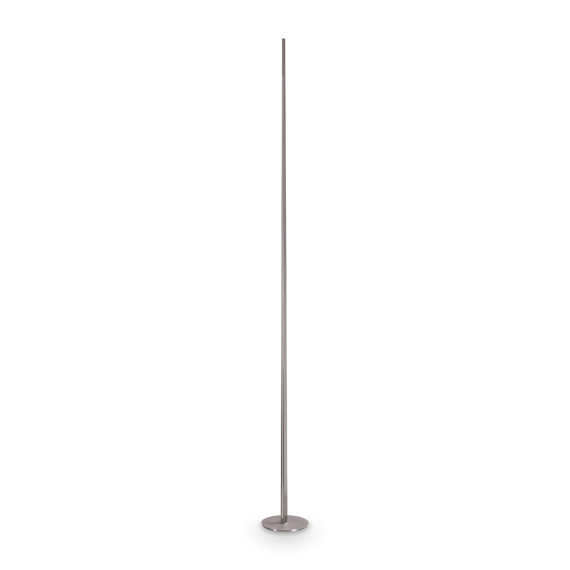
Blade LED floor lamp, very slim light rod, nickel, 251.2 cm
In stock
£652
- Height (cm)
- 251.2
- Bulbs included
- Yes
- Colour
- Nickel
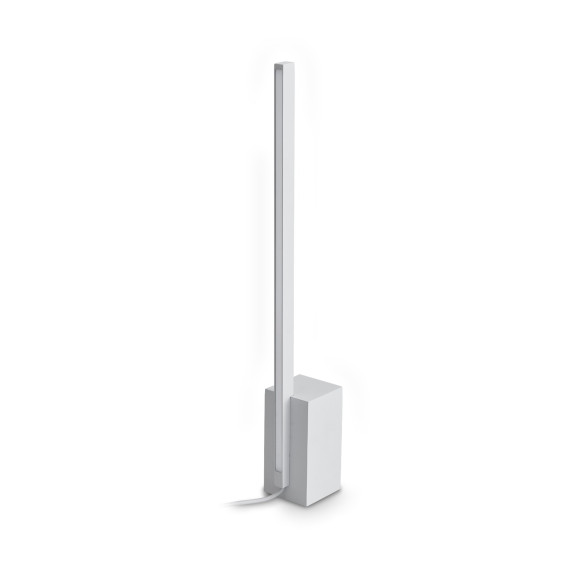
Essence white LED table lamp, light bar, square base
In stock
£118
- Height (cm)
- 39.5
- Width (cm)
- 5
- Depth (cm)
- 5.5