
A room short on daylight: the colours, curtains and furniture that soak it up
In a room short on daylight, start with the decor, not the lighting. A dark wall facing the window, curtains over the glass, a dark bookcase, a charcoal rug: fix those first, then light the evening.
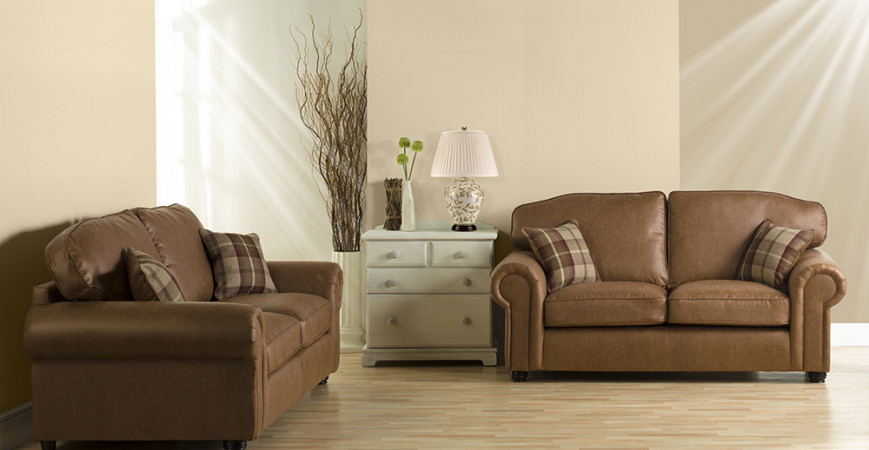
A "dark" room is often dark because of its own decor. The window lets in a fixed amount of light, and every surface it reaches sends part of it back and swallows the rest. That share runs from about 80% for matt white to under 20% for charcoal or dark wood, rough figures that lighting designers commonly work with.
The dark feature wall opposite the window
The wall facing the window gets the most daylight and sends it back into the room, which makes it the worst place for a deep colour. Repaint a 10 m² wall from matt white to charcoal and it reflects at least four times less light, and it is usually the largest vertical surface in the room. If you are set on that colour, put it on the window wall, which you see against the light and which sends back almost nothing useful anyway. The ceiling stays matt white, whatever happens. We advise against grey or taupe ceilings in any room short of daylight, even when fashion suggests them to "warm things up".
Curtains that spill over the glass
A curtain pole that stops at the edge of the frame forces open curtains to cover the glass by the full width of the gathered fabric, typically 15 to 20 cm each side, which is a quarter of a 1.20 m window. Extend the pole beyond the frame by at least that much, 20 to 30 cm each side in common practice, so the open curtains rest against the wall and not the glass. A white voile lets most daylight through. A Venetian blind with tilted slats or a Roman blind stopped halfway holds back a large share, and heavy curtains drawn during the day for privacy block nearly all of it. When you need privacy, frosted film on the lower part of the glass costs far less light than a half-lowered blind.
The mirror that bounces sunlight into your eyes
A mirror creates no light; it moves the light it receives, and what it should reflect is the window. Opposite a north-facing window, it sends sky light into the room all day without bothering anyone. Opposite a west-facing window, it throws the setting sun onto the sofa across the room, and you end up drawing the curtain, which cancels everything out. On the wall at right angles to the window, a large mirror acts like a second window and hardly ever dazzles. Smoked, antiqued or bronze-tinted mirrors, widely used in interiors, reflect much less than clear glass. Save them for a room that already gets daylight.
Tall, dark furniture near the window
A dark bookcase or wardrobe 2 m tall absorbs light like a charcoal wall. Placed on the return beside the window, it also eats the side light that used to reach the back of the room. Put tall furniture on the wall without a window and low furniture under the glass, and choose pale fronts, glazed doors or open shelving with the white wall showing behind. A tall unit does have one advantage in the evening, because its top can carry an LED strip or a lamp pointed up at the ceiling, the set-up described in the guide to lighting a room with no ceiling light.
All-matt everything, from velvet to rugs
A matt finish diffuses light, while satin reflects a little more in the same colour. The gap is small compared with the effect of colour, and we still don't recommend gloss walls, which mirror the lamps. The real problem is accumulation.
A charcoal velvet sofa, a 2 × 3 m chocolate-brown rug and deep grey walls soon cover most of the visible surfaces, and the room swallows whatever the window provides. Change just one of those surfaces, the rug for an off-white one or the wall for a soft white, and the room gets lighter without a single extra fitting. The floor counts as much as the walls. Dark floorboards or charcoal tiles reflect little, and a pale rug the size of the seating area makes up for it.
What the changes do in an 18 m² north-facing living room
The room is 4 × 4.50 m, with a 1.20 m wide window facing north, a white ceiling, a charcoal back wall, a grey velvet sofa, a dark rug and heavy curtains on a short pole. North light is steady and never direct, so anything that absorbs it costs you all day long. The back wall measures 4 × 2.50 m, or 10 m². Repainted in matt white, it reflects at least four times more than it did in charcoal. The extended pole frees 30 cm of glass out of 1.20 m, a quarter of the window. An off-white rug in place of the dark one and the mirror moved to the side wall finish the job, without buying a single light fitting.
When decor is not enough: lighting for the evening
Once it gets dark, no paint replaces a light source, and a north-facing room needs warm white to offset the coolness of its daylight. The guide to lighting a dark room gives the full plan, and the essentials fit in a few figures. A living room needs 100 to 150 lumens per m², so 1,800 to 2,700 for the 18 m² in the example. An uplighter floor lamp, bouncing 1,500 to 3,000 lumens off the white ceiling, provides the base, with table lamps of 300 to 600 lumens where people sit and a living room wall light of 300 to 500 lumens on the newly pale wall. Keep everything at 2,700 K and dimmable, so you can turn the uplighter down late in the evening and leave just the lamps on.
Models to compare
Living room lighting →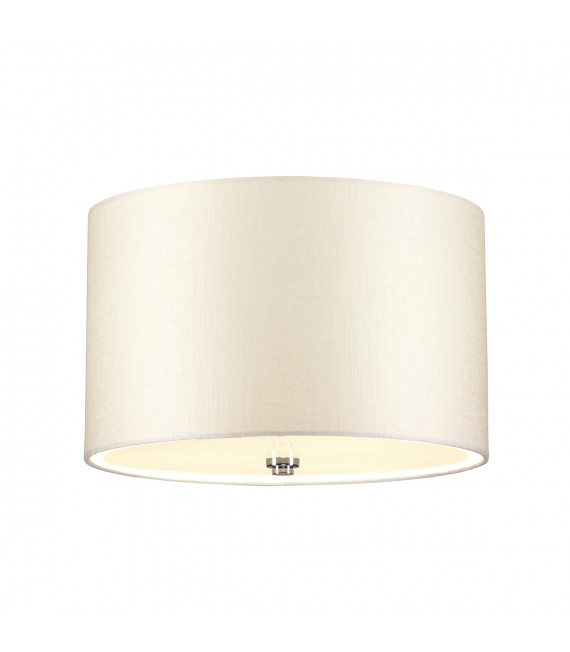
Small Fletcher ceiling light with ivory lampshade and chrome, 3 lights, 35.6 cm
In stock
£279
- Height (cm)
- 25.2
- Bulbs included
- No
- Colour / finish
- Polished chrome
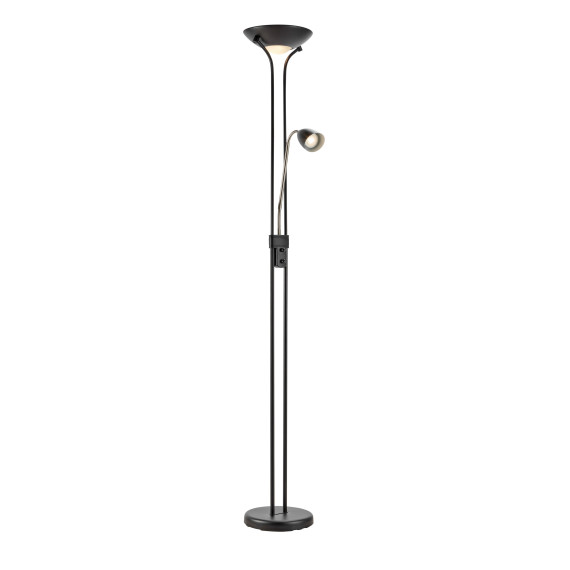
Modu black floor lamp with bowl and flexible reading light, 2 LEDs 180 cm
In stock
£192
- Height (cm)
- 180
- Bulbs included
- Yes
- Colour / finish
- Black
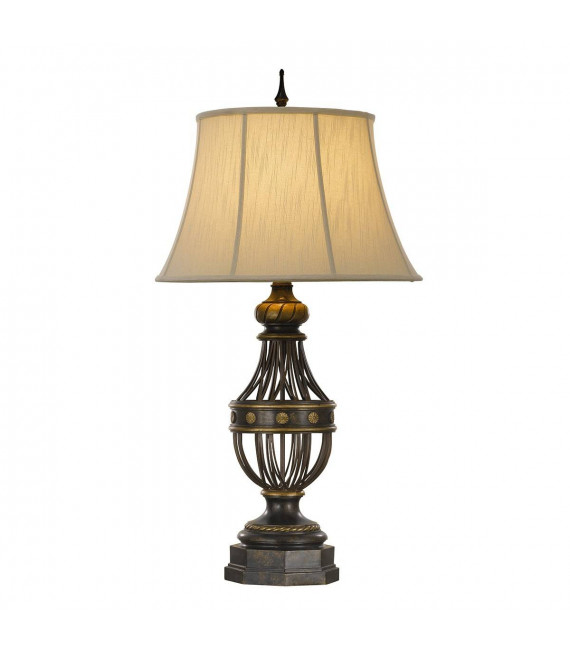
Augustine antique brown table lamp with openwork base and linen lampshade
In stock
£536
- Height (cm)
- 89.5
- Bulbs included
- No
- Colour / finish
- Antique brown