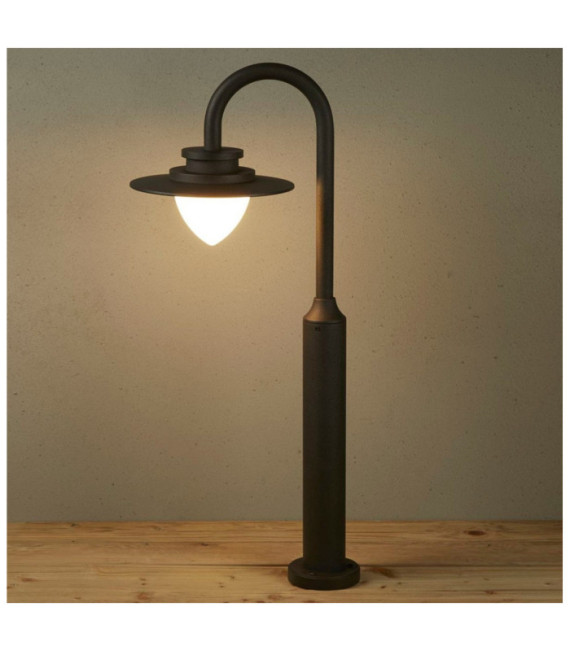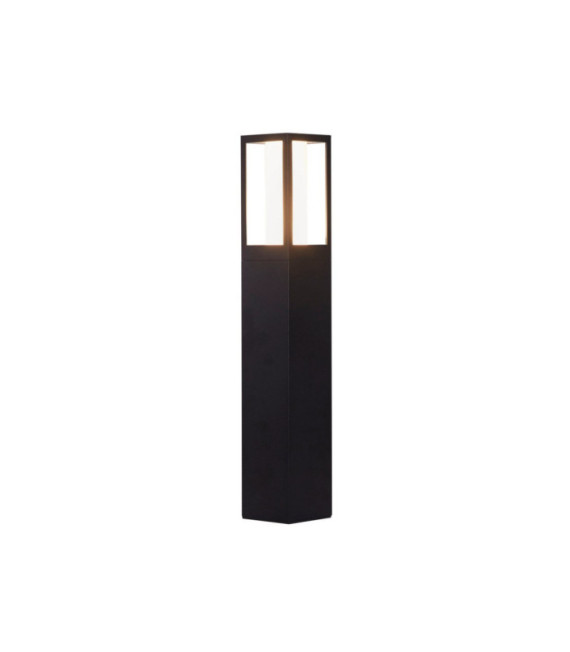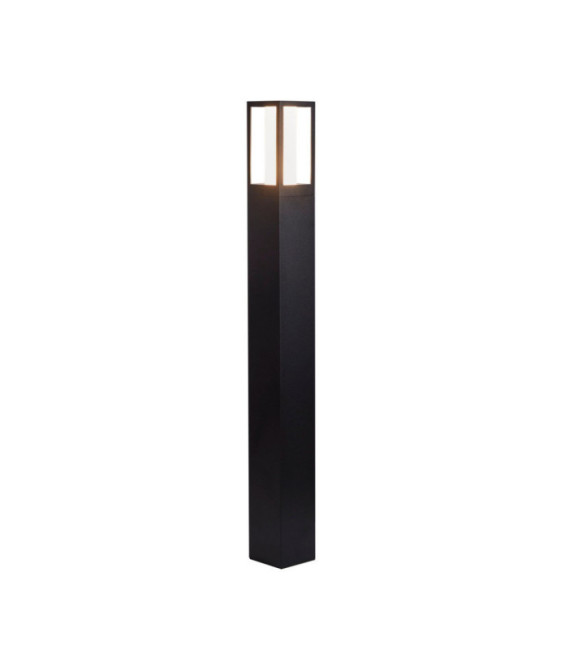
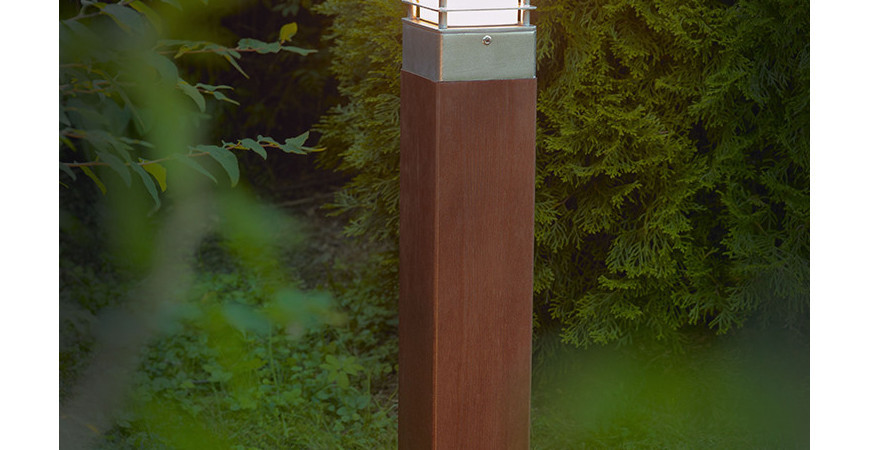
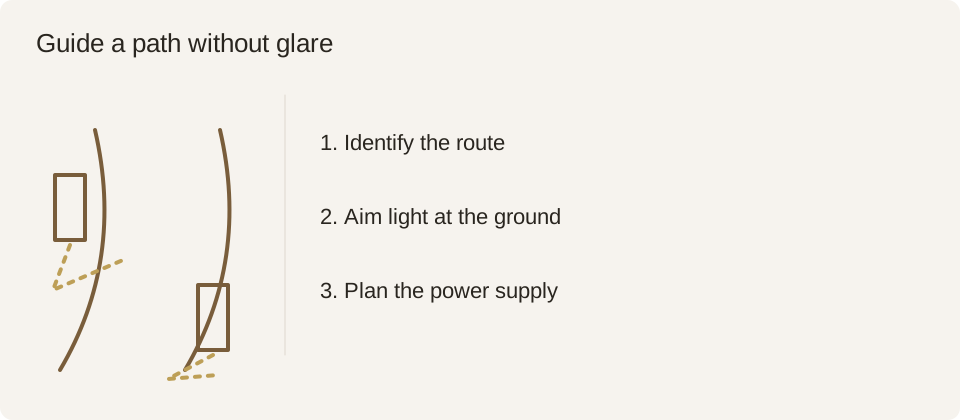
A garden path first needs to be readable. Lighting the whole garden evenly is not always useful. Locate bends, steps, the gate and obstacles before choosing fittings.
Choose a family for the available support
Bollards and short posts can accompany a route where ground fixing is possible. A wall light uses an existing wall and keeps the ground clear. A taller garden post is more prominent: check its size and light distribution rather than choosing only by wattage.
Compare the practical constraints
| Position | Advantage | Plan ahead for |
|---|---|---|
| Bollards beside a path | Markers close to the route | Bases, cables and surrounding maintenance |
| Wall lights on a facade | Clear ground | Wall support and beam direction |
| Taller post at an entrance | More visible marker | Footprint, fixing and glare |
Avoid a universal spacing rule
Spacing depends on the fitting’s height, optics and output as well as the shape of the route. A photograph alone cannot establish its lighting reach. For a long path or steps, ask for advice or a design based on the actual site plan.
Direct useful light
Choose distribution that reveals the ground and obstacles without aiming the source into eyes or neighbouring windows. Check the view in both directions of travel. A sensor or timer is available only when the chosen fitting or control system provides it.
Check durability and power
Compare the IP rating, materials and stated operating conditions for each reference. IP alone does not guarantee resistance to every environment, including coastal conditions. Have a professional plan power, cable routes and fixing under local rules. Low voltage does not mean an installation has no constraints.