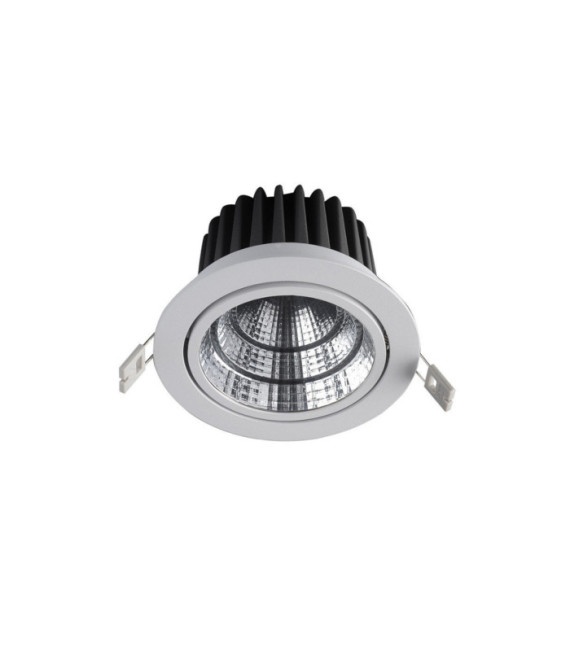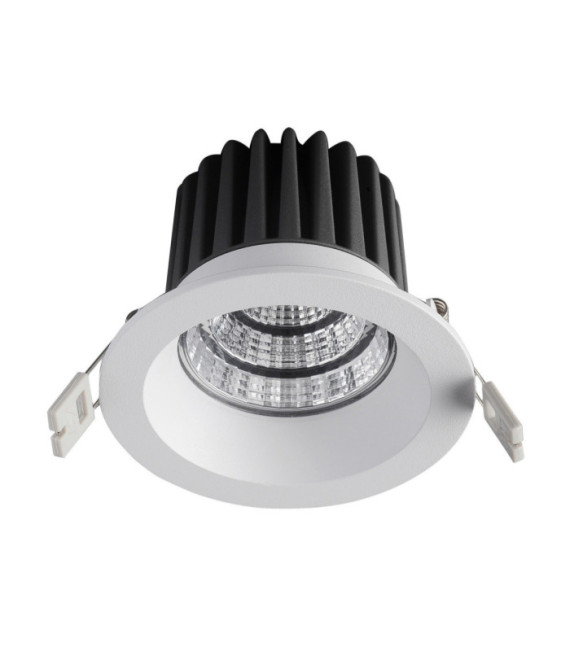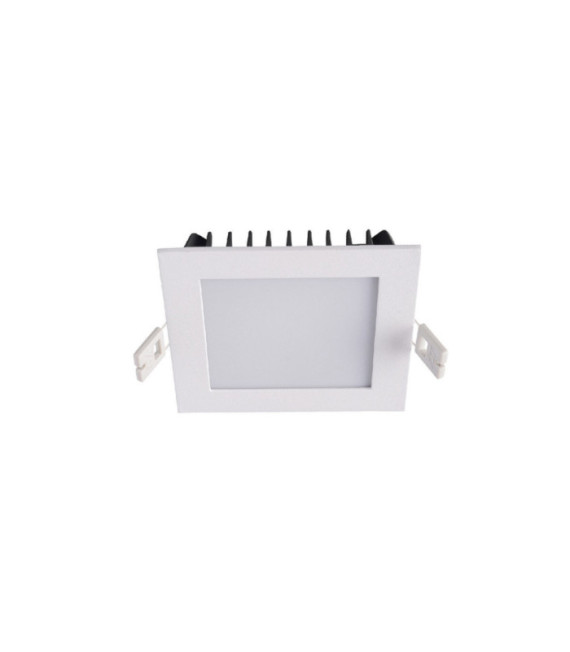
The choice between recessed and surface mounting depends as much on what is inside the ceiling as on the room. A discreet fitting in a photograph may require substantial space above the ceiling lining.
Distinguish the two families
A recessed spot fits into a cut-out and requires compatible space above. A surface fitting remains visible beneath the ceiling and may avoid that cut-out, but needs suitable fixing and has visible projection. Neither is universally easier to install.
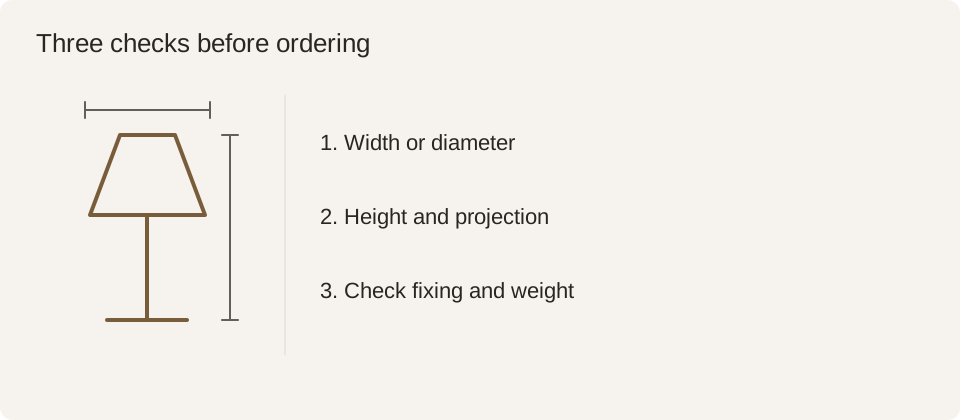
Record installation dimensions
For recessed models, compare outside diameter, cut-out diameter and required depth. These are three separate measurements. Include ventilation, insulation, housing and power-supply requirements stated in the instructions. Never assume a fitting can be covered.
Compare source and adjustment
Fixed and adjustable spots offer different flexibility. Check adjustment angle and beam angle when supplied: the first describes movement, the second light distribution. Neither should be inferred from a photograph.
Plan maintenance
A replaceable bulb needs a compatible cap and size. Integrated LED requires information about access to the source and driver. Make sure servicing will not require damaging the ceiling.
Have the layout checked
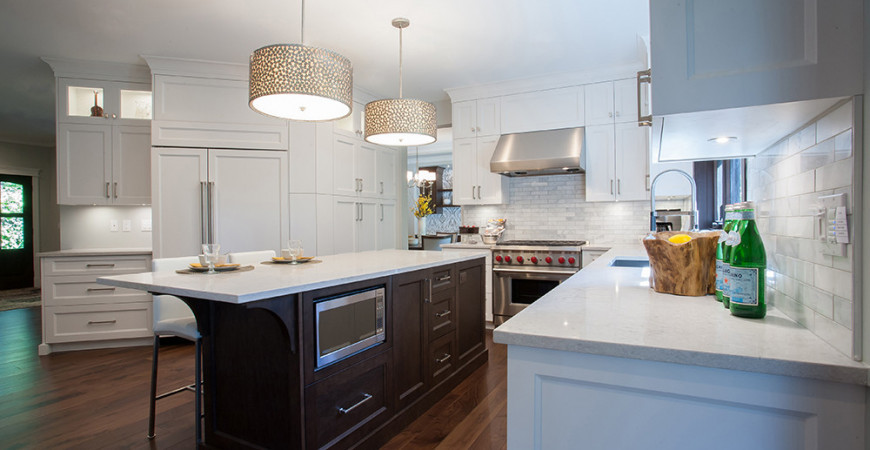
Draw the task areas and obstacles before arranging the lights. A regular grid will not automatically suit a worktop or artwork. Ask a professional to confirm ceiling structure, wiring and installation. In bathrooms and outdoors, verify the IP rating and location constraints for the exact model.