LED describes a technology, not a universal promise of replacement or dimming. Before buying, identify the source and how the manufacturer expects it to be serviced.
Distinguish two designs
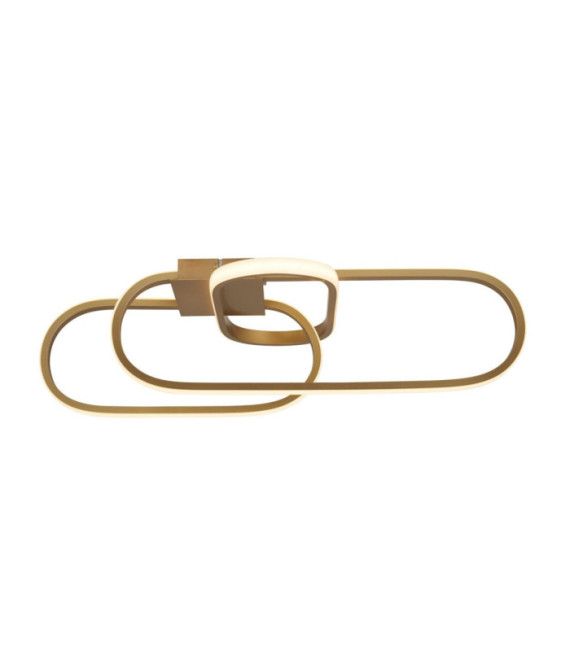
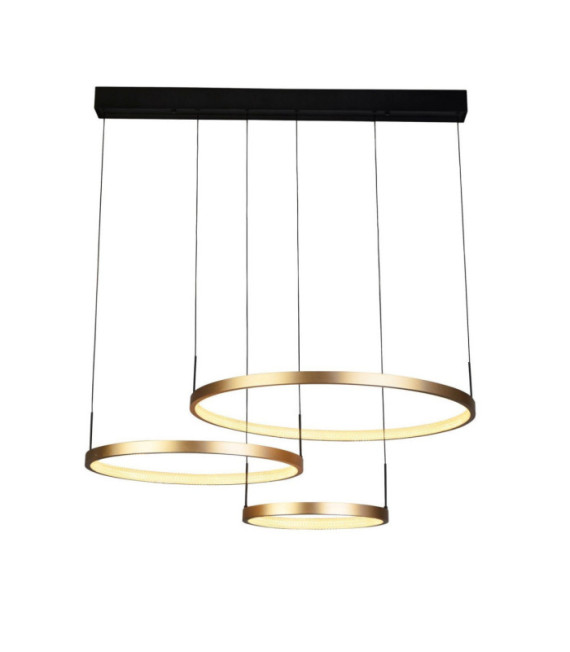
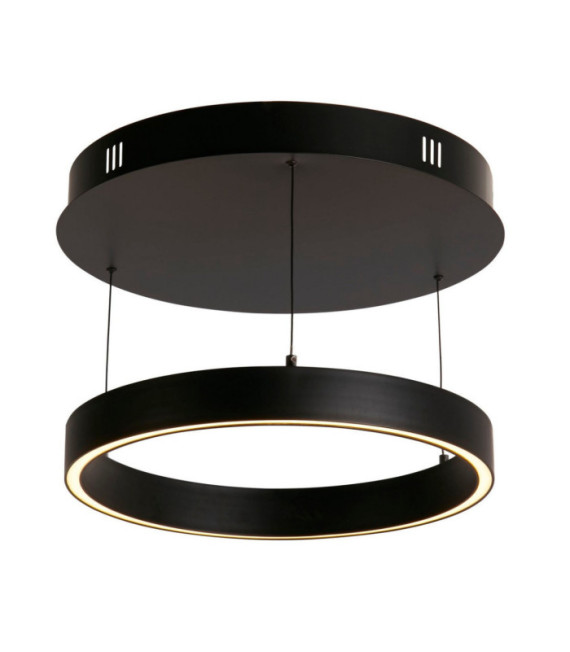
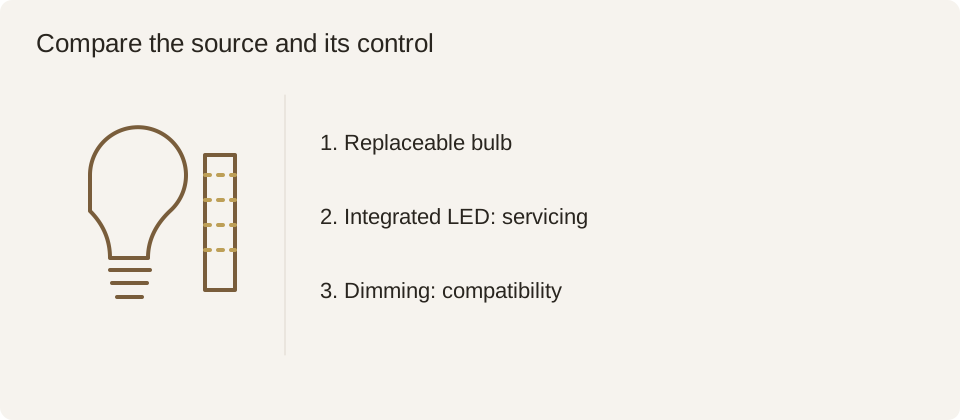
A replaceable-bulb fitting uses a compatible cap and bulb envelope. An integrated LED fitting incorporates the source into its design. Depending on the model, components may be replaceable by the user, by a professional or not designed for straightforward replacement. Look for an explicit statement.
Compare the stated data
Lumens describe stated output; watts describe consumption. Compare colour temperature, colour rendering where supplied and distribution too. Equal wattage does not ensure equal output or distribution. Do not turn lumens into a guarantee of light on your worktop.
Check actual maintenance
| Question | Replaceable bulb | Integrated LED |
|---|---|---|
| What changes? | Compatible bulb under the instructions | Source or driver where supported |
| What access is needed? | Opening and bulb removal clearance | Component access allowed by the instructions |
| What should you ask? | Cap, dimensions and maximum wattage | Component references and servicing procedure |
Confirm dimming
An LED bulb is not necessarily dimmable. An integrated fitting may use a particular driver and control method. Check the compatibility of the complete system and its limits instead of assuming an existing dimmer will work.
Choose for the project
If changing light colour later matters, examine the options a replaceable source offers. Integrated sources may suit slim forms or particular light distributions. Decide using model-specific data, maintenance and intended use, not a general lifespan promise.