This page helps you choose LED lighting: built-in module or LED bulb, then lumens, kelvins and CRI. An 8 W LED bulb replaces an old 60 W, not a 100 W: compare lumens rather than watts. Colour temperature comes next.
Integrated LED or an LED bulb: two quite different purchases
Most fittings in this section have a built-in LED module; the rest take an LED bulb. Both give as much light. They don't age the same way.
- Heat. An LED has to shed heat. A compact, enclosed fitting wears out its module faster than an open design, so for a closed globe pick a bulb rated for enclosed fittings.
- Dimming. An integrated LED fitting sold as non-dimmable will never become dimmable. With a bulb, buy one marked dimmable and pair it with a trailing-edge dimmer.
- Cover. Your statutory rights apply to both. Beyond them, the module's rated life in hours is what counts, so read it before you buy.
Integrated LED or LED bulb: which should I choose?
Take a bulb when the source is on show, a module when space is tight or the shape does all the work. Candle chandeliers and pendants with an exposed filament need a bulb, because you see the source; the same goes for a fitting that has to move house with you. The module wins for a 5 cm-deep flush disc under a ceiling lower than 2.50 m, an IP44 strip over a bathroom mirror, or an uplighter bowl giving 2,000 to 3,000 lm.
Can you replace the integrated LED in a light fitting?
No, unless the product page says so: a module can't be replaced, it is rated for 15,000 to 30,000 hours, sometimes 50,000, and if it fails, the whole fitting goes. L70 means that by then its output has fallen to 70%, not that the light goes out. A bulb with a standard cap (E27, E14, GU10, G9), by contrast, is changed in a minute.
Lumens, kelvins and CRI, the three figures worth comparing
After lumens and kelvins, read the CRI last. It should be at least 80, and 90 or more at a make-up mirror or in front of a painting.
How many lumens per square metre do I need to light a room?
Allow 100 to 150 lm per m² in a sitting room or bedroom and 200 to 300 in a kitchen or bathroom; a single ceiling light for 15 to 20 m² needs around 3,000 lm. To compare with an old bulb, 800 lm matches a 60 W bulb, 1,500 lm a 100 W.
Which colour temperature should I choose for LED lighting?
Take 2,700 K for the living room and bedroom, 3,000 K for the dining room and kitchen, and 4,000 K for a desk, a worktop or the mirror. A bulb comes in one of these three colours and can be swapped later. A module's colour is fixed when you buy it, apart from the few models with three settings.
Energy label and flicker, two traps
The energy label, tightened in 2021, puts an ordinary LED in class D, E or F; that is no flaw, and class A can't be promised. A cheap driver or an unsuitable dimmer makes the source flicker, which shows on a video call. Look for the words flicker-free, and respect the dimmer's minimum load, often 10 to 20 W, which one small bulb won't reach.
Six LED sections, and what LED changes in each
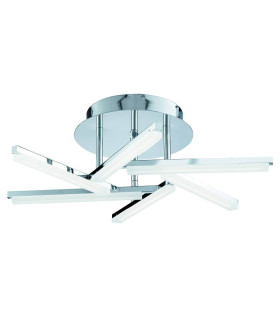
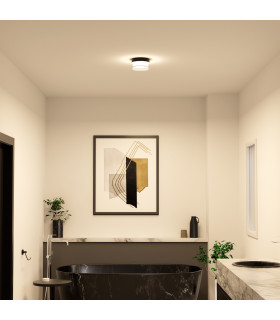
- LED ceiling lights make up the bulk of the range: flush discs and panels, a few IP44 models for the bathroom, large 7,000 lm discs for a living room.
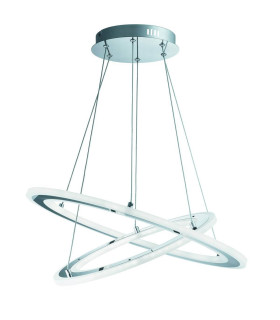
- LED pendant lights take shapes no bulb would allow, such as rings 70 cm to 1.50 m across or thin lines of light.
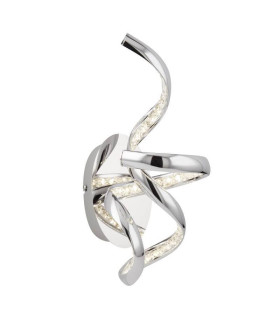
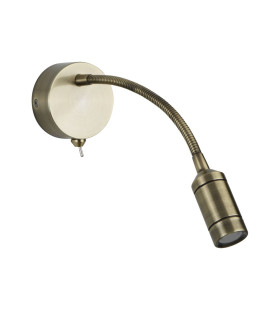
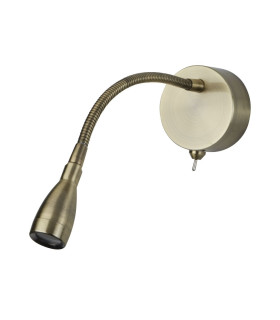
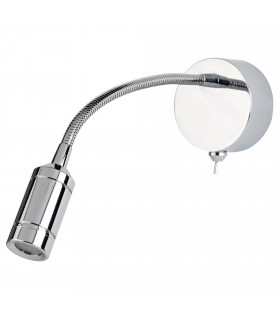
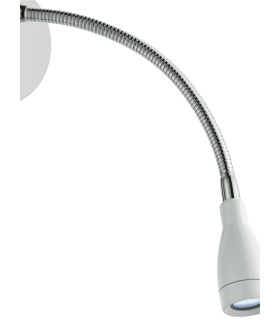
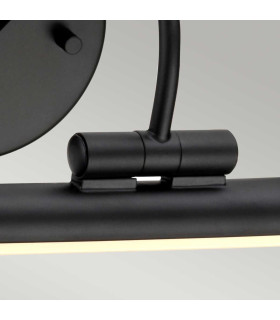
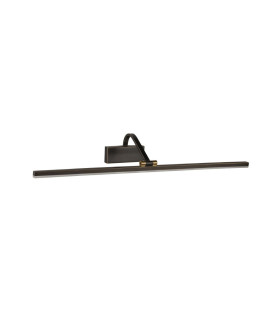
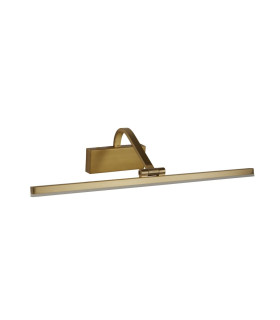
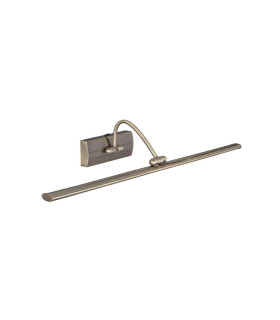
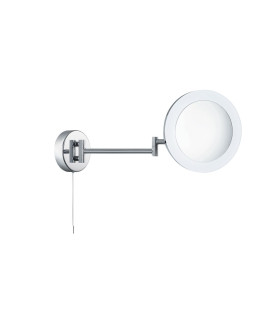
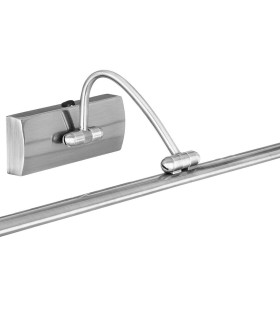
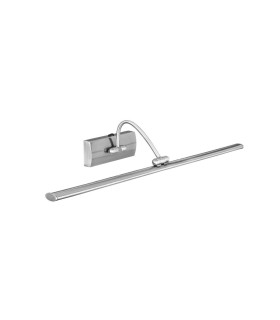
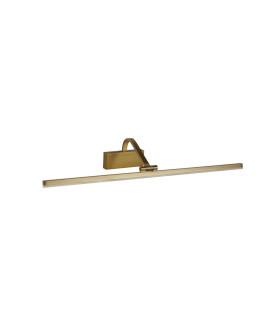
- LED wall lights cover over-mirror strips, flexible-arm reading lights and picture lights.
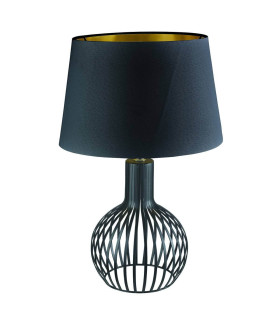
- Among the LED table lamps, check the output if you plan to read by one, 400 lm at least.
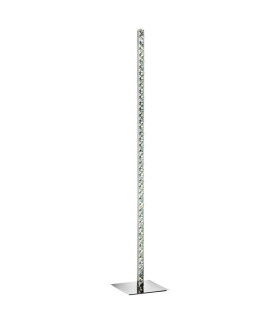
- LED floor lamps range from glowing columns to uplighters with a reading arm on the same stand, often dimmable.
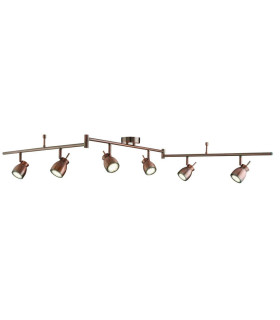
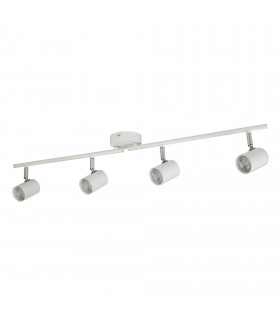
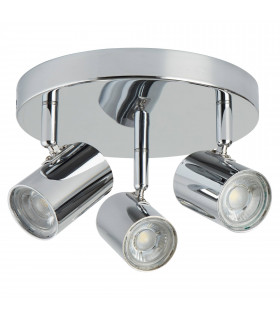
- LED spotlights form a small section, since many spotlights take a GU10 bulb.
For the garden, see LED outdoor lighting. Ring +33 1 84 20 32 51 to ask whether a module is dimmable or replaceable, Monday to Friday, 8am to 5pm UK time; free delivery in the UK and the European Union, 30 days to change your mind.