
The buying guide · 20 questions
Which light fitting should you choose? 20 practical buying questions
Choose light fittings around your room, available height and everyday activities. Practical dimensions, comparisons and links to suitable lighting ranges help you prepare your purchase.
Choose for my room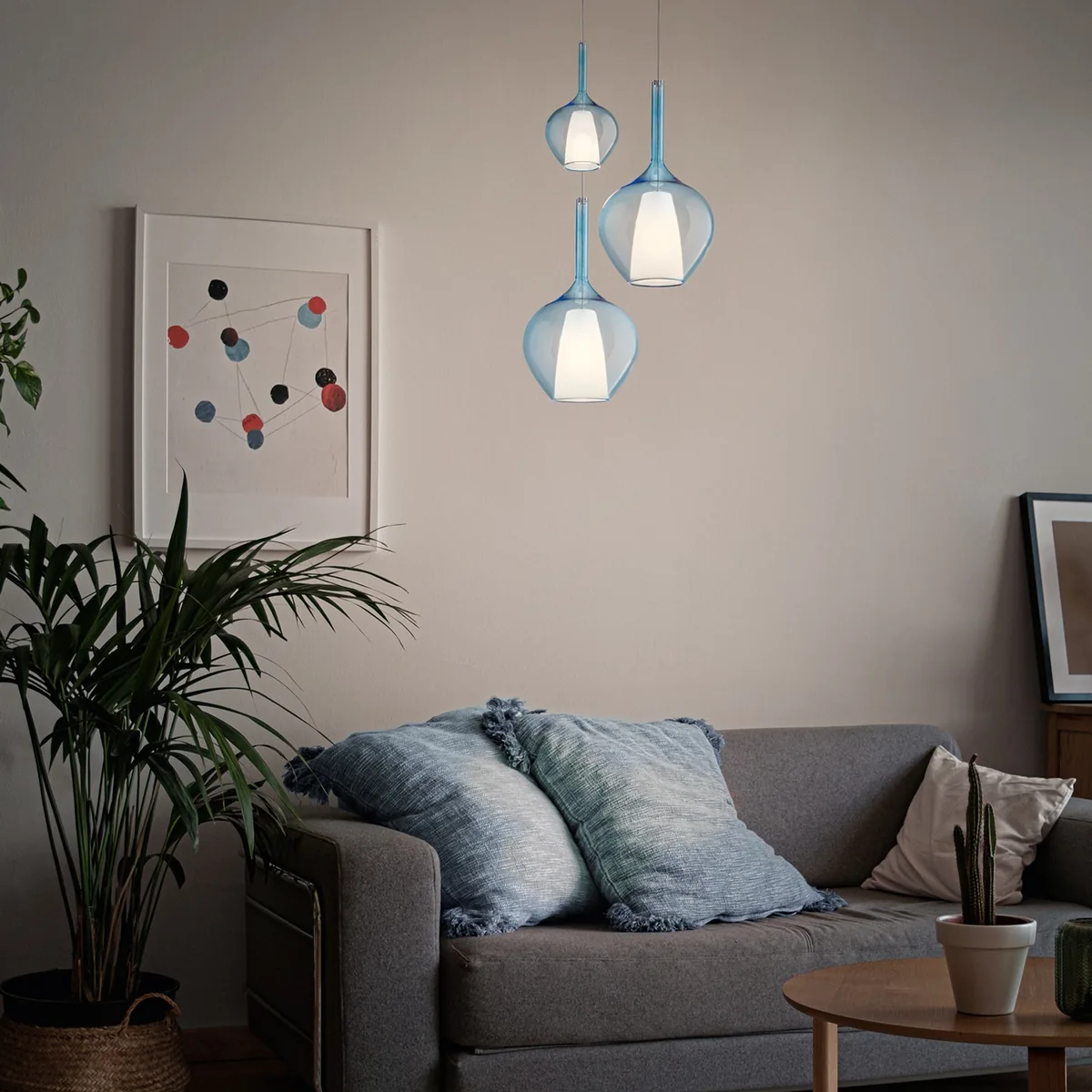
Choose a light fitting by what it has to light: a table, a page, a wall, a walkway. Each of the twenty questions below gives the figure to remember, then links to the guide behind it and to the matching category.
Lumens, kelvins, CRI, lamp caps, dimmers: our ten technical lighting questions before you buy explain the vocabulary. Here that vocabulary goes to work, room by room.
Living rooms, bedrooms and smaller spaces
Three measurements settle almost everything: floor area, ceiling height and where the seats are.
Manufacturer image: Ideal Lux Explore light fittings →
Which light fittings should I choose for a living room?
Allow 100–150 lm per m², shared between the ceiling, a reading corner and two or three low lamps.
For 20 m² that comes to 2,000–3,000 lm. The ceiling light provides the background; a floor lamp with a reading head puts 400–800 lm on the book; table lamps of 300–600 lm each are what stays on in the evening. Keep to one colour of white, 2,700 K. Move any lamp that reflects in the television screen.
How can I light a dark room effectively?
Aim for the top of the range, 150 lm per m², and split that output between three or four fittings at three heights.
Dark walls soak up part of the light, hence the upper figure. Packed into one central ceiling light, 3,000 lm reach the floor and leave the walls dim. Wall lights of 300–500 lm fixed 1.60–1.80 m from the floor do better, with lamps on the furniture. In the darkest corner, an uplighter aimed at a white ceiling lights by reflection.
Which light fitting works with a low ceiling?
Take 2.10 m off the ceiling height: what is left is the tallest fitting the room can take.
At 2.50 m, 40 cm remain, room enough for a short pendant. With 2.30 m you have 20 cm, which means a flush ceiling light with an opal diffuser. The sum applies wherever people walk, 2 m being the bare minimum; above a table nobody walks, so a pendant is possible again. Its diameter in centimetres: add the room’s length and width in metres, then multiply by 8.
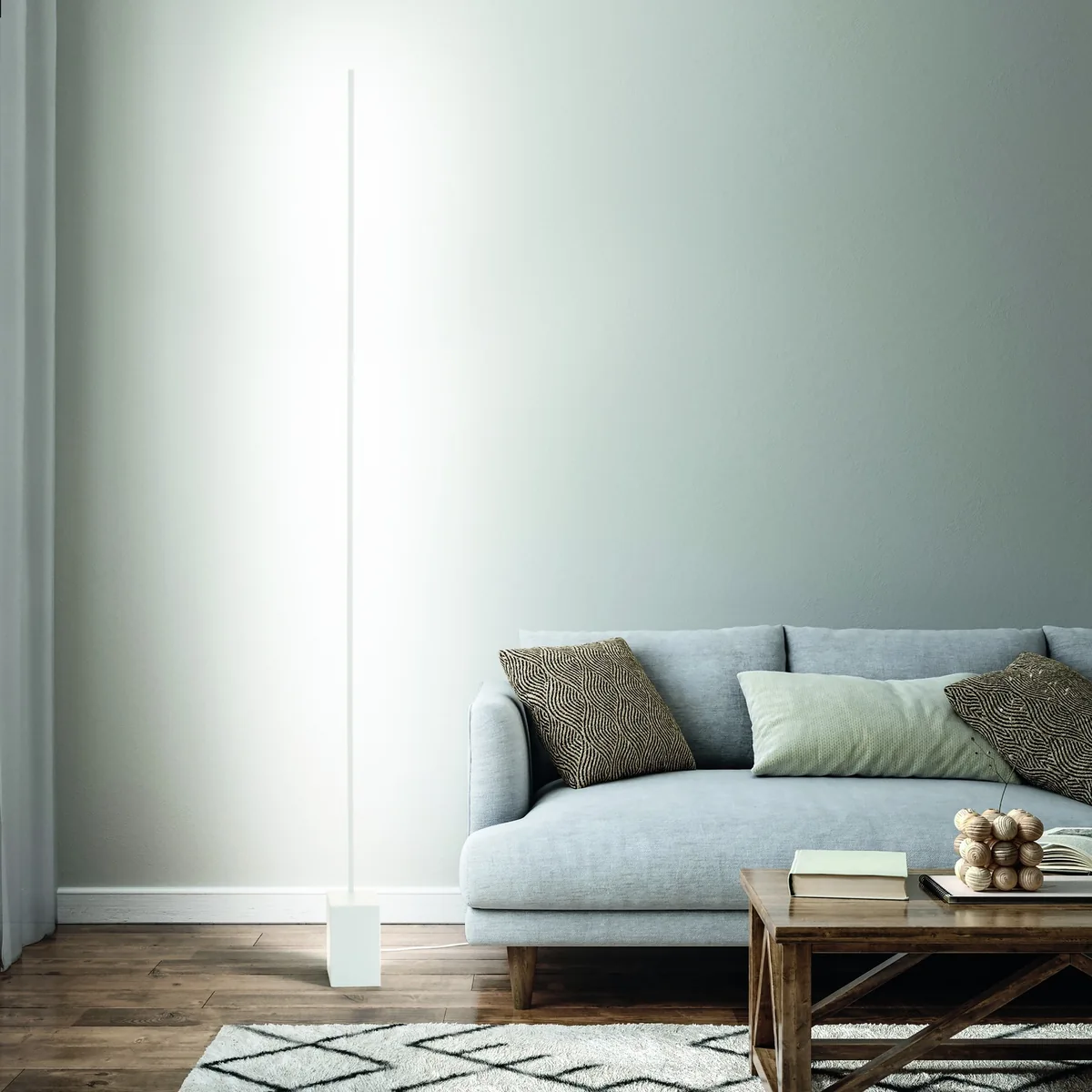
How can I light a room without a ceiling light?
An uplighter floor lamp of 1,500–3,000 lm, plugged into a socket, stands in for the ceiling light in a 15–20 m² living room.
It wants a white ceiling and a dimmer. A shaded floor lamp of 800–1,500 lm lights its own corner, not the room. Add a reading lamp and one more small lamp, and three sockets light 20 m². An ordinary wall light needs a cable in the wall, and running one is an electrician’s job.
Which light fittings should I choose for a bedroom?
A dimmable ceiling light at 2,700 K for the background, 100–150 lm per m², plus a reading light on each side of the bed.
Twelve square metres call for 1,200–1,800 lm. Under a 2.50 m ceiling, pick a flush ceiling light over a pendant. Reading takes 400–800 lm in a directed beam: a wall light on an adjustable arm, fixed 1.10–1.30 m from the floor, sends it to the page, not onto the other pillow.
How should I light an open-plan living and dining room?
Each zone gets its own light and its own switch; one colour of white, 3,000 K, across both.
The pendant is centred on the table, 70–80 cm above the top, with 1,500–2,000 lm for six places. That leaves the ceiling rose, which is rarely right above the table. If it is 40 cm out, a swag hook brings the drop back into line.
Dining tables and kitchens
Over a tabletop, two dimensions count: the diameter of the fitting and the height of its lowest point.
Manufacturer image: Ideal Lux Explore light fittings →
What pendant diameter should I choose for my dining table?
Between half and two thirds of the width of the tabletop.
So a table 90 cm wide wants 45–60 cm, and a 1.20 m round one takes 60–80 cm. Past 1.60 m in length, a single pendant leaves both ends in shadow. Line up two or three instead, 30–40 cm each and 60–80 cm apart. Still unsure? Hold a cardboard circle over the table.
How high should a pendant hang above a dining table?
70–80 cm between the tabletop and the bottom of the pendant.
With the top about 75 cm off the floor, the base of the fitting ends up around 1.45–1.55 m. Under a 3 m ceiling that takes close to 1.50 m of flex and fitting, so sort out any extension before you buy. On weight, the standard bracket and hook at the ceiling rose stop at about 5 kg.
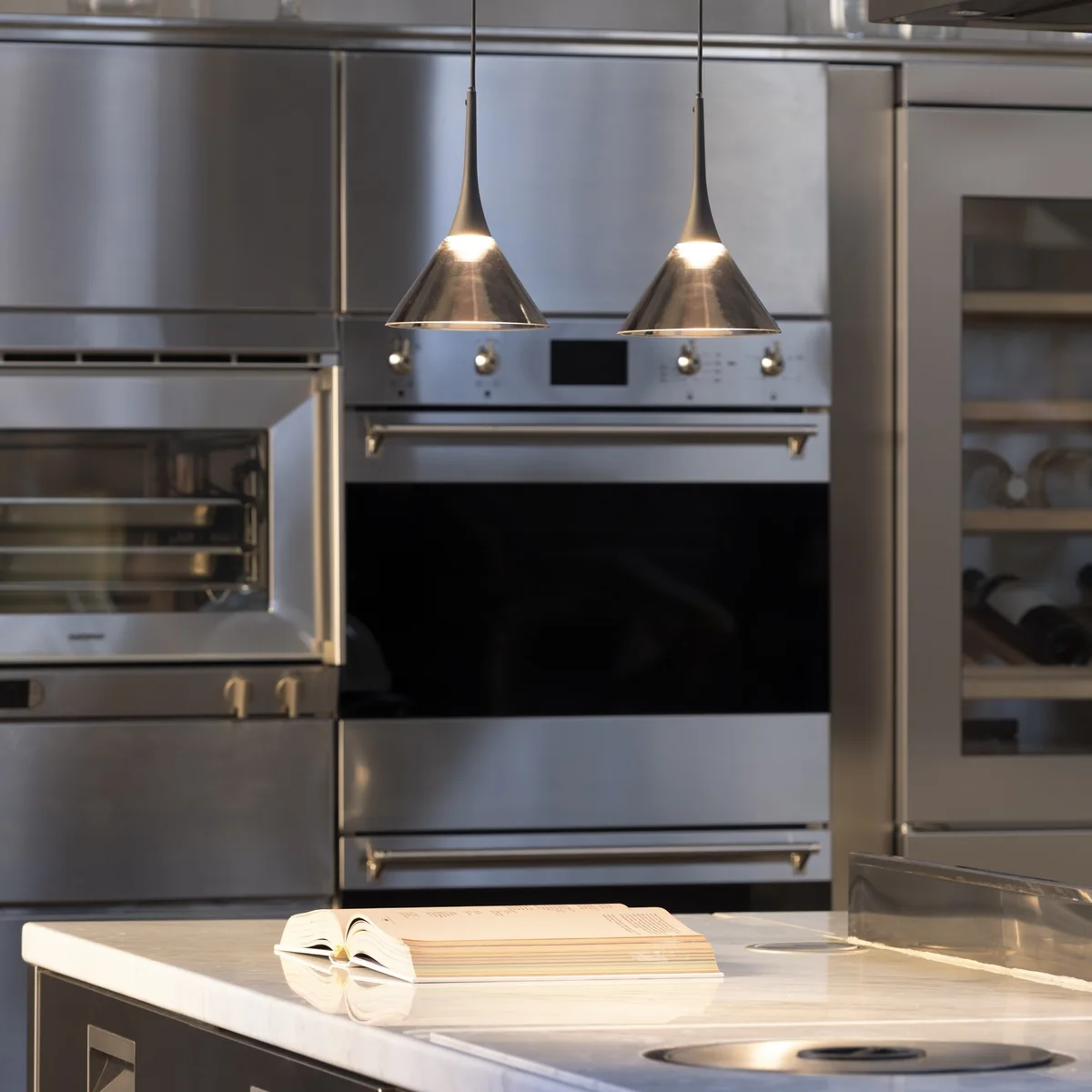
How many pendants do I need over a kitchen island?
One pendant covers 60–80 cm of worktop: two for a 1.50 m island, three for 2.40 m.
The gap from one fitting to the next follows the same figure, 60–80 cm. At 1.80 m, in between, allow two wide pendants or three small ones. Set the bottom 75–90 cm above the island.
Which lighting should I choose for a kitchen and its worktops?
Worktop first: 300–500 lux in neutral white at 4,000 K, with no shadow on your hands.
When the only ceiling light is in the middle of the room, it shines from behind you and your shadow falls on the chopping board. An LED strip light fixed towards the front of the wall units solves that. No wall units? Line up spotlights of 300–500 lm about 50 cm from the wall, one every 1–1.5 m. General light comes last, 200–300 lm per m², all sources included.
Style, wall lights and reading
First a shared finish. Then one direction of light per task: reading, doing your hair, walking down a hallway.
Manufacturer image: Ideal Lux Explore light fittings →
How can I coordinate different lights in one room?
One dominant finish per room, a second as an accent, never three.
Matt black with pale wood, brass with dark wood, chrome with glass: those pairings work. Shapes are free to vary, and fittings that match too closely make a room look like a showroom. And one colour of white for every light.
How do I choose a wall light for its intended use?
Output follows the job: 300–500 lm to light a wall, 400–800 lm in a directed beam for reading, 500–800 lm on each side of a mirror.
On a living room wall, a model that shines up and down hides the light source. It needs 60–80 cm of clear wall below the ceiling, otherwise it leaves a hot spot there. Beside the mirror, go for opal glass, 4,000 K and a CRI of 90 or more. Where a hallway is under a metre wide, keep the projection below 10 cm.
At what height should I position a wall light?
1.60–1.80 m from the floor in a living room or hallway, 1.10–1.30 m at the bedside, 1.55–1.65 m on either side of a mirror.
These heights run from the floor to the centre of the fitting. Along a hallway, fit one every 2–3 m. In front of the mirror the height is eye level, while a light placed above the glass goes up to 1.90–2 m. Outdoors, fix it above the eye line, and at 2–2.50 m if it has a built-in sensor.
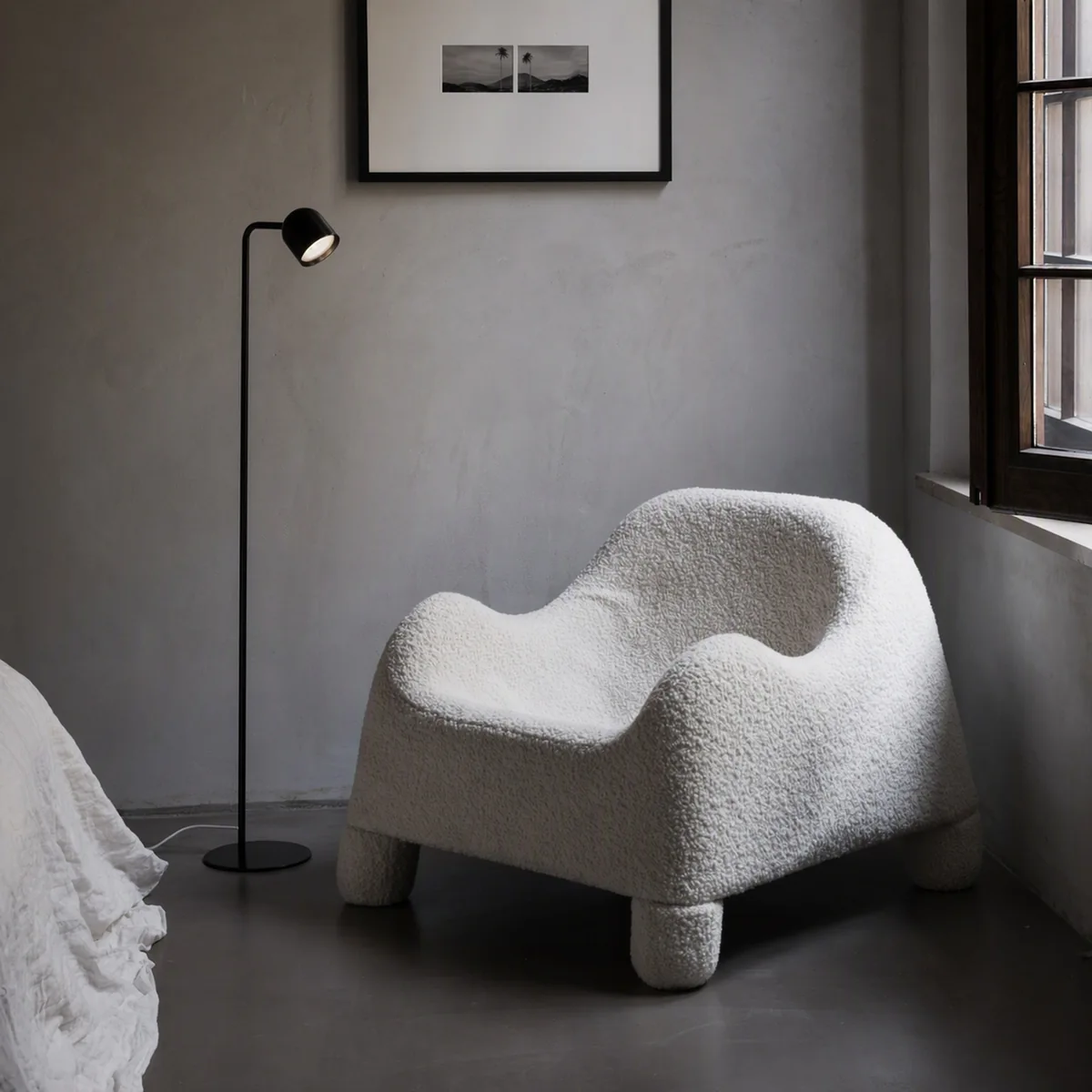
Which floor lamp should I choose for reading in an armchair?
An adjustable reading lamp of 400–800 lm, its head a little above your shoulder and slightly behind it.
Sit down first, book in hand. Stand the base on the side opposite the hand that turns the pages, so that neither head nor arm casts a shadow on the text. Above 800 lm the page glares and the rest of the room looks black. An uplighter won’t do here, since its light goes to the ceiling.
Spotlights and ceilings
The ceiling decides how spotlights are mounted; the output of each one decides how many you need.
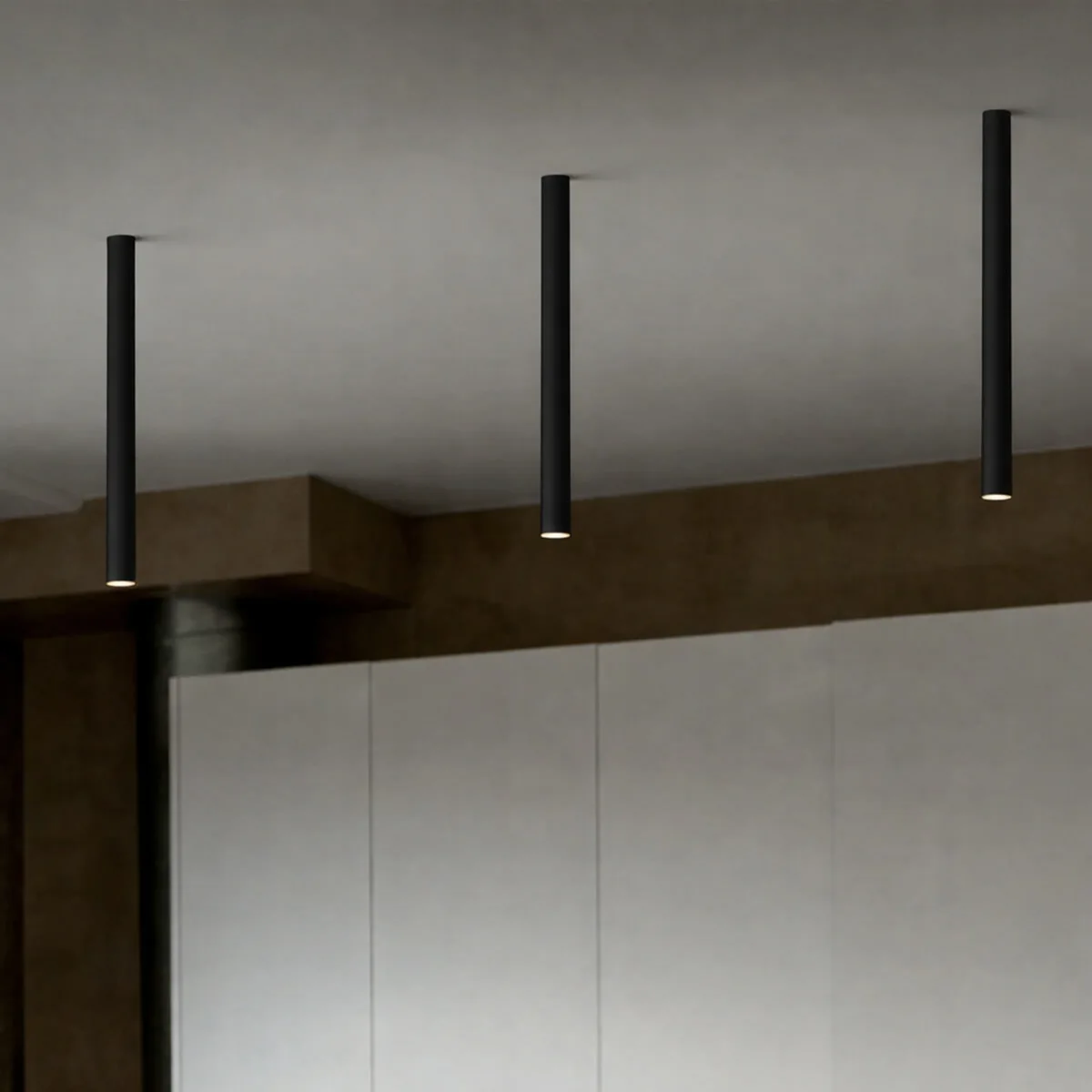
Manufacturer image: Ideal Lux Explore light fittings →
Should I choose recessed downlights or surface-mounted spotlights?
Recessed if there is a void above the ceiling, surface-mounted under a bare concrete slab.
Behind the plasterboard, a GU10 spotlight needs about ten centimetres and a flat LED module 3–4 cm. The usual cut-out for a GU10 is 68 mm; recess depth and cut-out diameter are on every product page. Beneath insulation, use a model rated for contact with it or fit a protective cover over the top. Below a room upstairs, check that the downlight is fire-rated. Surface spotlights and tracks need no void.
How many spotlights do I need, and how should I space them?
One 300–500 lm spotlight for every 1–1.5 m² in a kitchen, bathroom or hallway; one 300 lm spotlight for every 2–3 m² in a living room or bedroom.
Space them 1–1.5 m apart and keep them 50 cm from the walls. A 20 m² living room, at 2,000–3,000 lm, takes seven to ten spotlights of 300 lm, or four to six of 500 lm. A 12 m² bedroom gets by on four to six 300 lm spotlights alone, and on three once there are two bedside lamps.
Bathrooms and mirrors
Distance from the bath or shower sets the IP rating, and the mirror needs lights of its own.
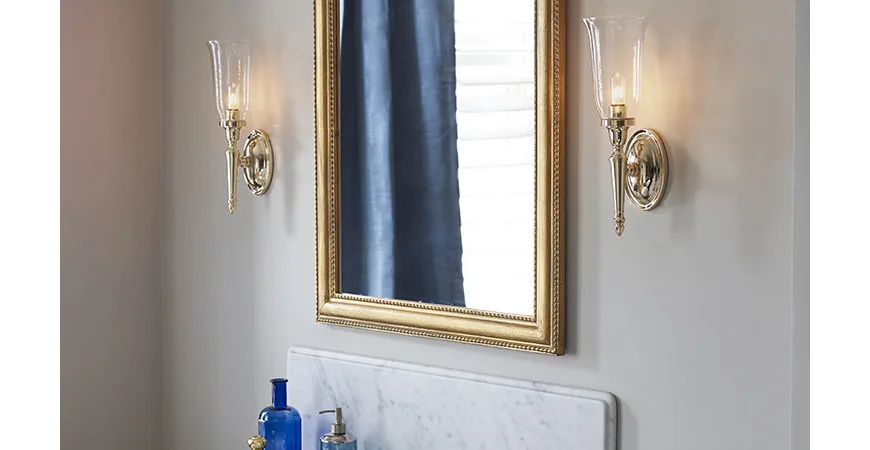
Explore light fittings →
Which ceiling light should I choose for a small bathroom?
Choose an IP44 model, with 200–300 lm per m².
That makes 1,200–1,800 lm for 6 m². In a small room the centre of the ceiling soon falls within 60 cm of the bath or shower tray, and that is zone 2 of BS 7671: IPX4 minimum. Directly above the bath or tray, up to 2.25 m from the floor, is zone 1, with IPX4 again and IPX5 if water jets can reach the fitting. Beyond the 60 cm band nothing is required. With no tray, zone 1 extends 1.20 m around the fixed shower head. Work inside the zones is notifiable under Part P in England and Wales, so call a registered electrician.
Which lighting works best around a bathroom mirror?
Two wall lights of 500–800 lm, one on each side of the mirror, centred 1.55–1.65 m from the floor, at 4,000 K with a CRI of at least 90.
On its own, the ceiling light catches the top of your head and leaves your eyes in shadow. A backlit mirror is more decoration than light for the face. Where there is no room at the sides, an over-mirror light of 800–1,200 lm goes just above the top edge, 1.90–2 m from the floor. More than 60 cm from the bath or shower tray, IP44 is advised, not required. Closer than that, IPX4 is the minimum.
Patios and gardens
Outdoors, what lands on the fitting, rain or standing water, sets its IP rating before style comes into it.
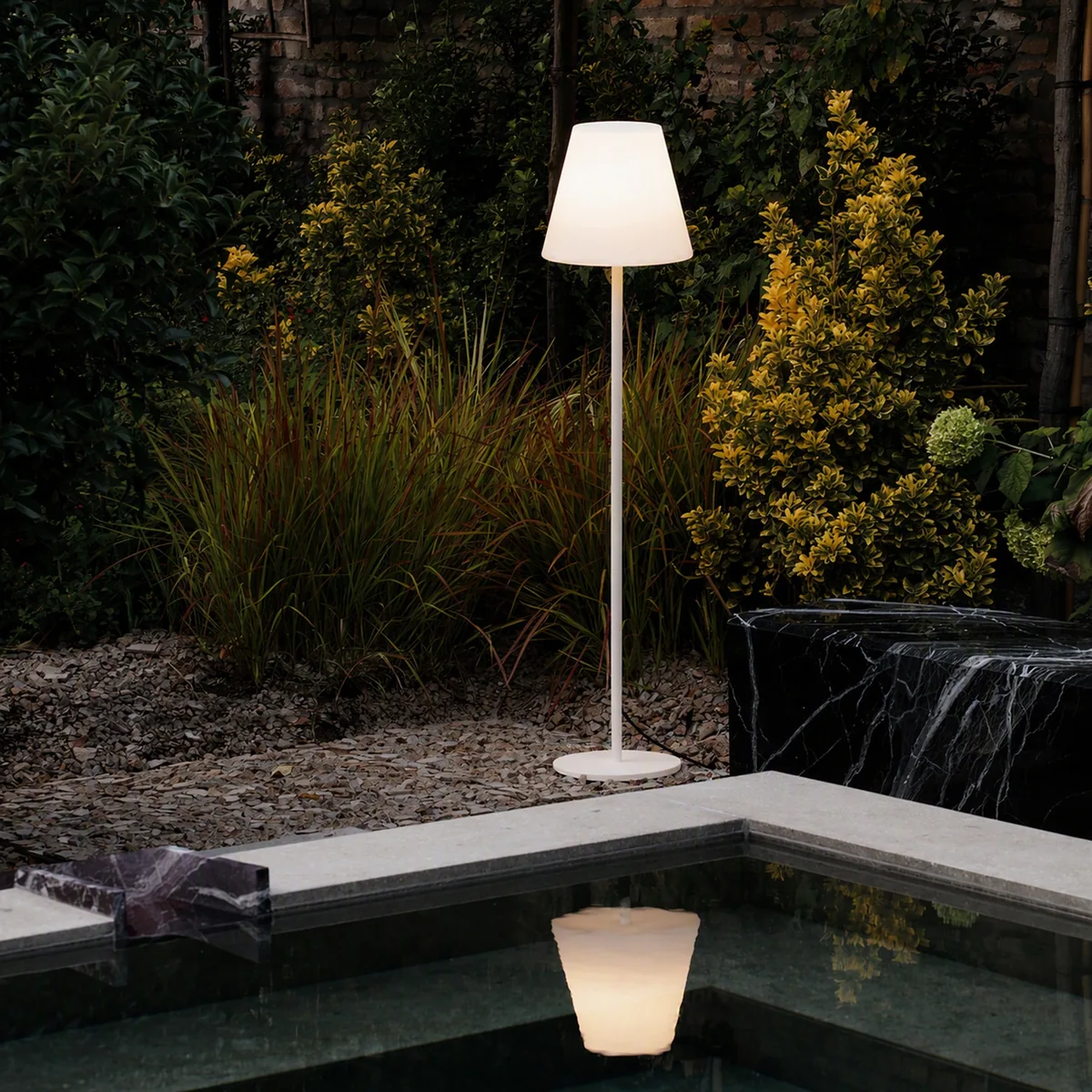
Manufacturer image: Ideal Lux Explore light fittings →
Which lighting should I choose for a patio exposed to rain?
IP65 for any fitting the rain can reach; IP44 only under a solid roof.
A pergola covered with reed screening, adjustable louvres or a fabric sail lets water through, so IP65 applies underneath as well. Open to the sky, nothing hangs over the table. Light it from the house instead, with two wall lights of 400–800 lm fixed above eye level and turned towards the table. Leave the weatherproof socket and any buried cable to an electrician.
Bollards, posts or wall lights: how should I light a garden path?
A bollard of 40–60 cm every 2–3 m, a post light of 80–100 cm every 3–4 m; a wall light where a wall runs alongside the path.
Allow 200–500 lm per bollard, with the source hidden by the head; any brighter and it dazzles. On steps, choose IP67 recessed lights over a bollard planted at the bottom, which glares on the way down. Ratings to check: IP65 out in the garden, IK08 at least for a ground light. The 230 V supply, in armoured cable made for burial and behind a 30 mA RCD, is wired by an electrician.
Sources and further reading
The figures come from the guides listed under each question; a model’s specification is on its product page. Three manufacturer pages, in French, set out the general principles:
Models to compare
Lighting by room →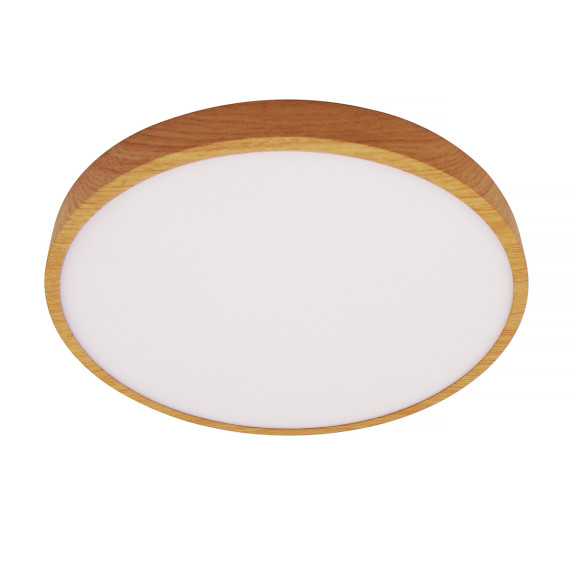
Riberio LED ceiling light, wood trim, extra-flat 2.5 cm, Ø 28 cm
In stock
£58
- Height (cm)
- 2.5
- Colour / finish
- Wood
- Materials
- Aluminium, Wood
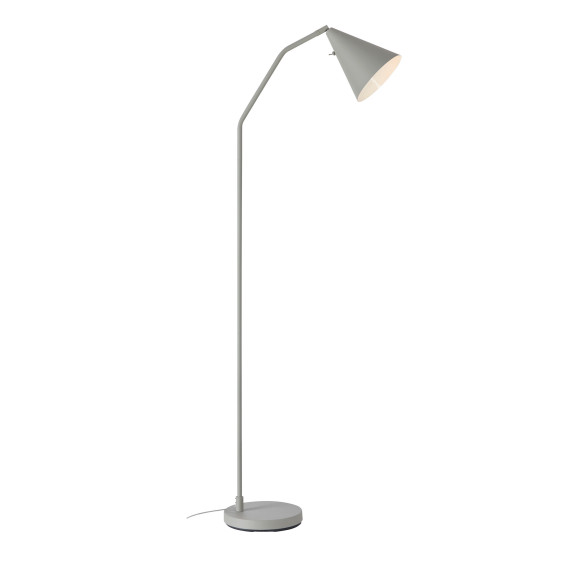
Funil grey floor lamp with conical head and variable LED, 144 cm
In stock
£104
- Height (cm)
- 144
- Width (cm)
- 23
- Depth (cm)
- 47.5
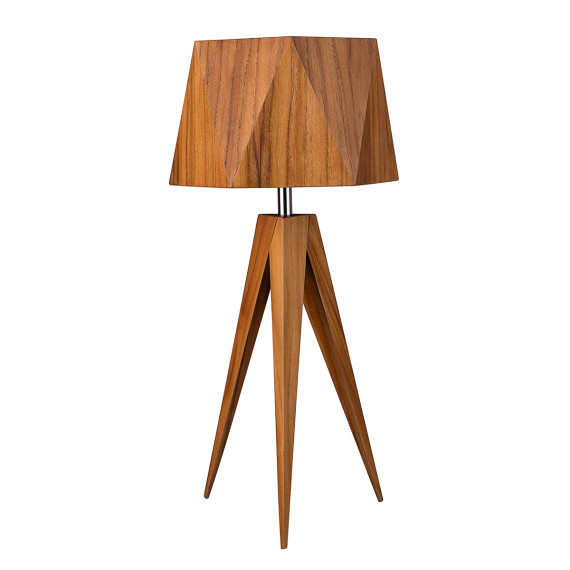
Angular table lamp, tripod and faceted teak shade, 62 cm
In stock
£573
- Height (cm)
- 62
- Bulbs included
- No
- Colour / finish
- Teak